Fire ants are a persistent pest problem for Houston homeowners. Understanding the different control methods available helps you make informed decisions about protecting your lawn and family. This guide compares the two primary fire ant control approaches.
Understanding Fire Ants in Houston
Fire ants are not native to Texas but have established themselves throughout the region. These aggressive insects:
- Live in colonies of 100,000 to 500,000 individuals
- Build mounds in yards, pastures, and open areas
- Defend their territory aggressively
- Deliver painful stings to humans and pets
- Attack livestock and wildlife
The average Houston property may have dozens of mounds, each representing a separate colony requiring management.
Mound Treatment Method
Mound treatment targets individual colonies, addressing specific problems directly.
How Mound Treatment Works:
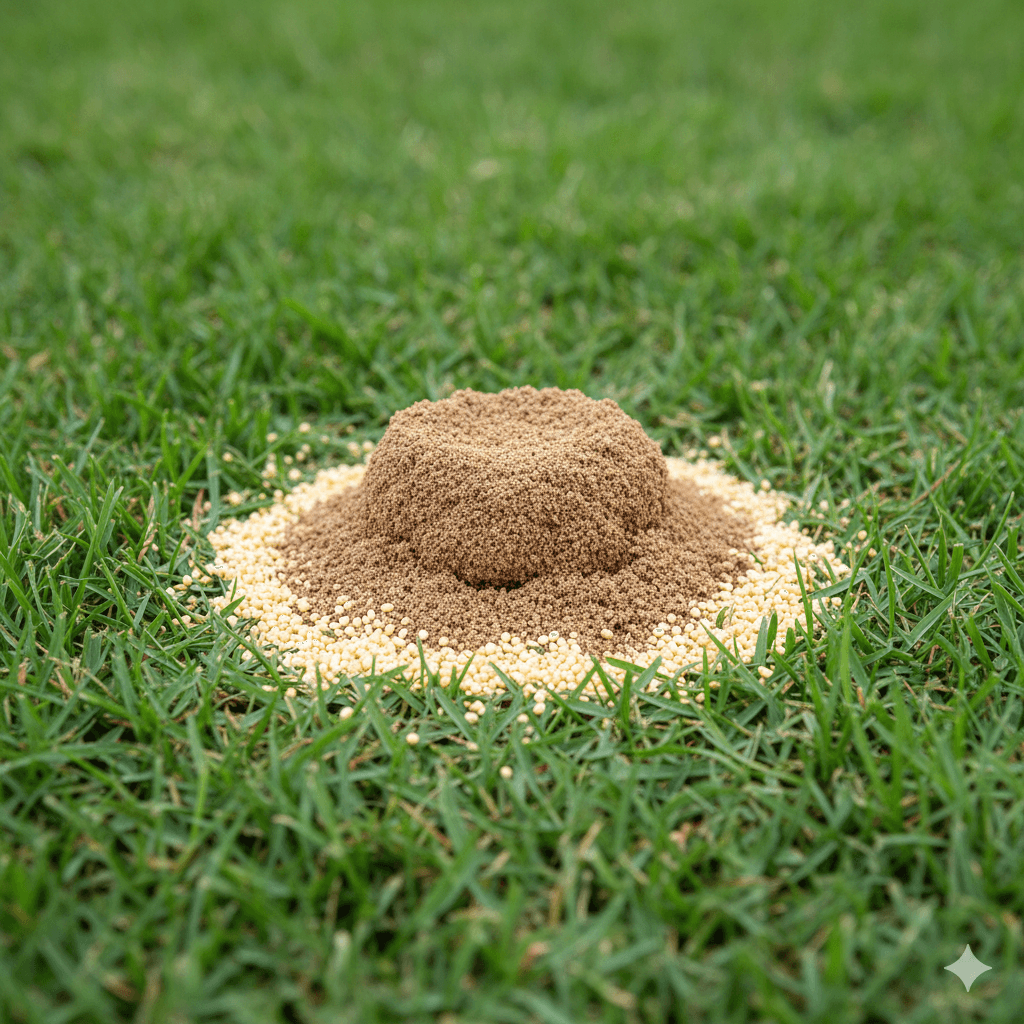
Individual fire ant mounds are treated with pesticides designed to kill the colony. Products include:
- Granules applied directly to mounds
- Liquids poured into mound tunnels
- Bait systems that workers carry to the queen
Mound Treatment Advantages:
- Targets specific problem areas
- Faster results at treated mounds
- Less total pesticide applied to property
- Ideal for treating accessible mounds
- Can be done immediately when nests appear
- Allows selective treatment of high-traffic areas
Mound Treatment Disadvantages:
- Multiple treatments needed for multiple mounds
- Labor-intensive for large properties
- New mounds will continually appear
- Doesn't prevent new colonies from establishing
- Less effective long-term solution
- May only address visible mounds
Best For:
- Properties with limited mounds
- Homeowners wanting immediate relief
- Problem areas around patios and walkways
- Temporary solutions before comprehensive treatment
Broadcast Method
Broadcast application treats the entire yard uniformly, addressing both visible and hidden colonies.
How Broadcast Treatment Works:
Products are applied across the entire lawn area, typically as:
- Granules spread evenly by spreader
- Liquid spray applied to lawn surface
- Professional application equipment for even distribution
The active ingredient is distributed throughout the soil where fire ants forage, targeting colonies throughout the property.
Broadcast Method Advantages:
- Addresses all colonies at once, visible and hidden
- Prevents new colonies from establishing
- Most cost-effective for large properties
- Professional application ensures even coverage
- Longer-term protection
- Works on multiple acre properties effectively
- Reduces total mound population over time
Broadcast Method Disadvantages:
- Covers entire property, even areas without current problems
- Takes longer to eliminate existing colonies
- Requires professional application for best results
- More total pesticide applied
- May need multiple applications for complete control
- Less targeted approach
Best For:
- Large properties with numerous mounds
- Long-term comprehensive control
- Properties wanting to prevent future infestations
- Integrated pest management approach
Choosing the Right Method
The best method depends on several factors:
Property Size:
- Small yards: Mound treatment for specific problems
- Large properties: Broadcast method for economy and effectiveness
Mound Count:
- Few visible mounds: Mound treatment
- Many mounds or extensive infestation: Broadcast method
Budget Considerations:
- Limited budget: Mound treatment of problem areas
- Complete control priority: Broadcast investment
- Long-term cost: Broadcast typically cheaper over time
Timeline:
- Immediate relief needed: Mound treatment
- Willing to wait for complete control: Broadcast method
Environmental Concerns:
- Minimize pesticide use: Mound treatment
- Comprehensive control acceptable: Broadcast method
Integrated Fire Ant Management
The most effective approach combines methods:
-
Initial Assessment: Professional inspection identifies colony density and locations
-
Targeted Mound Treatment: Address problem areas immediately
-
Broadcast Application: Implement comprehensive control across entire property
-
Regular Monitoring: Watch for new mound development
-
Maintenance Applications: Repeat treatments annually to prevent reinfestation
-
Non-Chemical Methods:
- Remove debris that provides shelter
- Maintain thick, healthy grass that competes with ants
- Eliminate standing water sources
- Keep landscaping beds clear of unnecessary vegetation
Natural and Alternative Methods
Several non-chemical approaches provide supplementary control:
Beneficial Nematodes: Microscopic organisms parasitize fire ant larvae. Effective but slower than chemical methods.
Diatomaceous Earth: Causes dehydration in insects. Works on contact but requires repeated application.
Cinnamon: Some natural deterrents show limited effectiveness in research.
Integrated Approach: Combine natural methods with targeted chemical control for best results.
Fire Ant Bait Systems
A third option uses bait systems:
- Worker ants collect bait and carry it to the queen
- Slower action but effective for large infestations
- Less disturbance to mounds
- Worker ants must actively collect bait
Baits work best when combined with mound or broadcast treatments.
When to Treat
Spring (March-April) is ideal because:
- Colonies are active but not yet at peak population
- Treatment is most effective
- Warm weather supports pesticide activity
- Prevents summer population explosion
Summer treatments work but may be less effective due to ant activity patterns and heat effects on products.
Professional Fire Ant Control
Professional pest control services understand Houston's specific fire ant challenges. They can:
- Assess your property accurately
- Recommend the most effective approach
- Apply treatments professionally
- Monitor results and retreat as needed
- Advise on prevention strategies
- Address safety concerns for children and pets
Safety Considerations
Whether you choose DIY or professional treatment:
- Follow all product label instructions
- Keep children and pets away from treatment areas
- Wear appropriate protective equipment
- Never attempt to spray into active mounds
- Be aware of stinging risk
- Store products safely away from children
Post-Treatment Care
After treatment:
- Observe treated areas for several days
- Note if new mounds appear
- Plan repeat treatments as needed
- Maintain good cultural practices
- Consider professional monitoring program
Fire ant control requires persistence. Complete elimination is challenging, but effective management significantly reduces the population and problem areas.